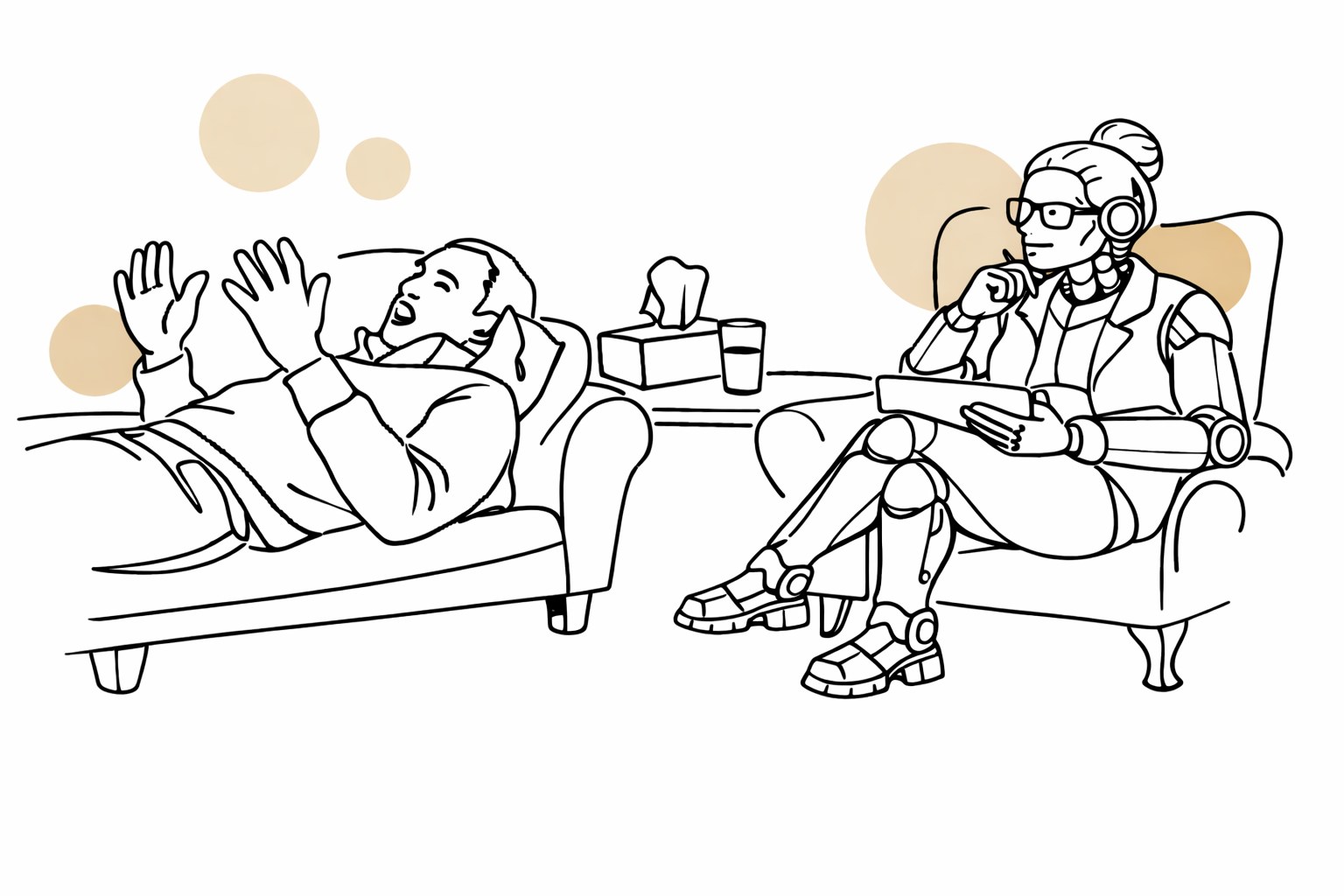
What do Woebot, Wysa and Youper have in common? These are all AI agents that use therapeutic techniques to help users improve mental well-being, guide meditation and even help with managing anxiety.
In this article, AI mental‑health agents are goal‑directed conversational systems that sit with you in a chat or voice interface to support specific wellbeing tasks; for example, walking through CBT‑style exercises, practicing coping strategies, or checking in on mood over time.
In the broader AI literature, these would be considered agents because they are built around particular goals and workflows, whereas “agentic” AI usually refers to more autonomous systems that can independently plan multi‑step actions, call tools, and adapt their behaviour with relatively little human steering.
Translating that distinction into the mental‑health space, the tools we discuss here behave more like tightly scoped, therapeutically scripted companions than fully agentic systems that roam across apps and channels on your behalf.
The mental health industry has been completely disrupted by these agents, as AI no longer plays the role of a simple symptom checker or static content library. Millions of users make good use of these conversational users for a support that “feels” human.
When AI agents adopt therapeutic styles, from CBT-inspired coaching to companion-like reassurance, their interaction patterns start to shape how people think, feel and act over time. For teams building these products, the therapeutic style is therefore not an aesthetic choice; it is a safety decision with regulatory, reputational and ethical consequences.